


Russian Manicure and regular manicure can both shape the nails, prepare the surrounding area and finish with polish or gel. The main difference is not simply whether an electric file appears on the table; it is the dry, detailed preparation system and the degree of technical specialization used around the nail.
01Russian Manicure vs. regular manicure: the essential difference
A Russian Manicure is typically a dry manicure performed with an electric file, selected bits and, in a combined method, a cutting tool. The technician works in detailed stages to prepare the nail plate and refine the perimeter before product application.
A regular manicure is a broader category. Depending on the salon, it may include soaking or softening, pushing back the surrounding area, shaping with a hand file, light buffing and applying conventional polish or gel. Some regular manicures are entirely dry, and some include an e-file for removal, so the terms can overlap.
02Side-by-side comparison
| Feature | Regular manicure | Russian Manicure |
|---|---|---|
| Working method | May be wet, softened or dry | Generally dry |
| Primary tools | Hand file, buffer, pusher and optional nippers | E-file, purpose-selected bits and often a cutting tool |
| Preparation detail | Usually conventional perimeter and plate preparation | Usually more detailed work around the nail and application zone |
| Appointment length | Often shorter, depending on the coating | Often longer because preparation and structure may be more detailed |
| Finished look | Clean conventional polish or gel finish | Often a highly refined perimeter with close, controlled application |
| Main safety variable | Conservative tissue handling and hygiene | Those same requirements plus advanced e-file control |
These are typical patterns rather than fixed definitions. A highly trained technician may deliver a very detailed regular manicure, while a service marketed as Russian Manicure may not follow a thoughtful or conservative system.
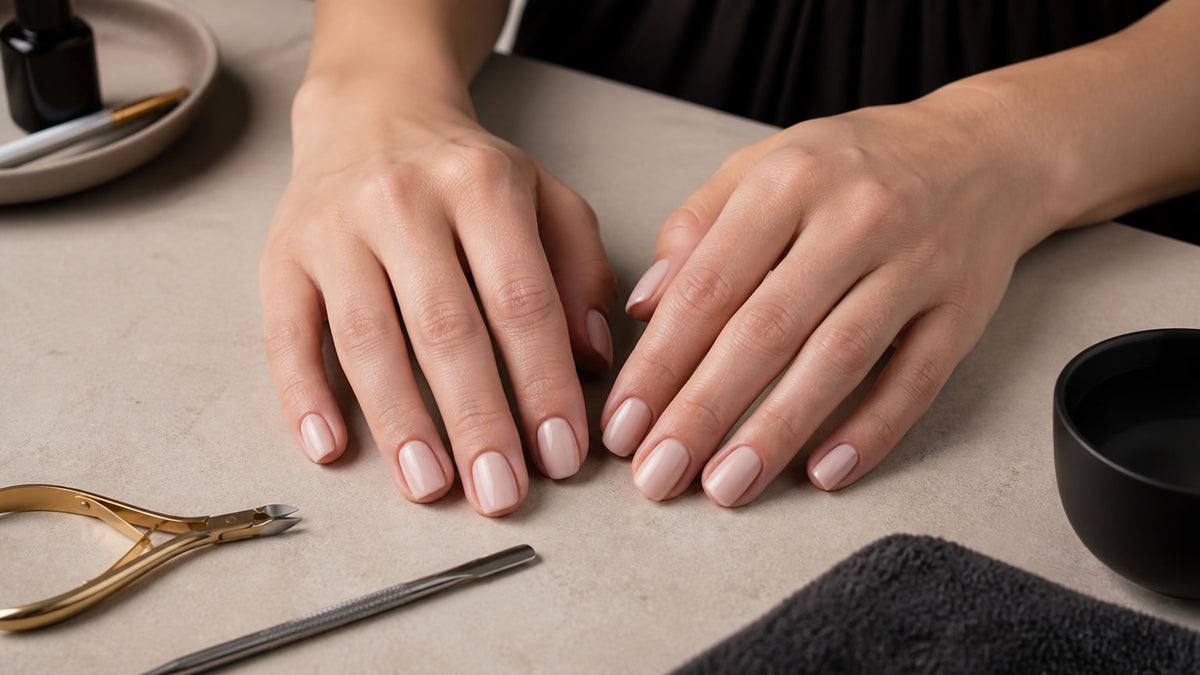
03How do the appointments differ?
Both should begin with assessment. The technician observes the nail plate, surrounding skin, previous coating and client goals before deciding what work is appropriate.
Regular manicure
The nails are shaped, the surrounding area may be softened and gently managed, the plate is prepared as required, and polish or gel is applied. The service can prioritize maintenance, simplicity and efficiency.
Russian Manicure
Different bits may lift and refine non-living material, clean the application zone and support precise product placement. The sequence is adapted to tissue and nail condition rather than repeated identically.
04Does Russian Manicure look better or last longer?
Detailed dry preparation can create a visually refined perimeter and allow controlled product placement close to, but not on, the surrounding skin. This may make the initial result and early grow-out appear cleaner. It is an aesthetic advantage, not a universal health advantage.
Preparation can influence adhesion, but it cannot guarantee retention. Wear also depends on natural-nail condition, product compatibility, structure, layer thickness, complete curing, client habits and aftercare. A regular manicure performed with excellent preparation and product control can outperform a poorly executed Russian Manicure.
The nail plate absorbs water and changes with hydration, but that fact alone does not prove that every wet manicure causes lifting. Claims about wear should be evaluated as part of the complete application system rather than reduced to “wet versus dry.”
05Is one method safer?
Neither method is automatically safe. Any manicure can cause injury when living tissue is cut, the natural nail is over-filed, products contact skin or tools are inadequately processed. Russian Manicure adds a need for precise e-file training because detailed work occurs close to delicate structures.
The CDC states that cuticles act as barriers to infection and advises against cutting them. The American Academy of Dermatology advises consumers not to cut or forcefully push them back. For a full analysis, read Is Russian Manicure Safe? Risks, Warning Signs & Standards.
06Which manicure should you choose?
Choose detailed dry preparation when
- You value a highly refined perimeter and structured gel application.
- The technician has specific e-file education and can explain their process.
- Your nail and surrounding skin condition are appropriate for the proposed service.
- You accept that a more detailed appointment may take longer and cost more.
Choose a simpler regular manicure when
- You want straightforward shaping, care and conventional polish.
- Your priority is a shorter maintenance appointment.
- Detailed perimeter work is unnecessary or the surrounding area is sensitive.
- You prefer a conservative service with fewer technical stages.
There is no professional reason to force every client into the most technically elaborate option. The appropriate service is the least aggressive method that can meet the client's reasonable goal.
If detailed dry preparation suits your goals, see the complete Russian Manicure process and tool sequence. For maintaining the finished service, continue with retention, aftercare and choosing a technician.
07Questions to ask before booking
- What exactly does the salon include under “Russian Manicure” or “regular manicure”?
- Will the service be dry, softened or soaked, and why?
- What e-file training has the technician completed?
- How are reusable tools processed and single-use items discarded?
- How will the method change if the skin is sensitive or the nail plate is thin?
- Does the quoted time and price include removal, structure and color?
A clear consultation matters more than terminology. Two salons can use the same service name while offering very different appointments.
For a technician-level explanation of how assessment, preparation, product application and safety work together, read the complete professional guide to Russian Manicure.

08Sources and further reading
This article is educational and does not provide medical, legal or licensing advice. Service names and professional requirements vary by salon and jurisdiction. Practitioner observations are informed by Nailspiracy's Russian Manicure 360 curriculum and are separated from independent medical and public-health sources. Reviewed August 2026.