


A professional Russian Manicure appointment is a sequence of decisions, not a performance of maximum depth. The technician assesses first, then chooses the least aggressive tools and movements capable of preparing the nail for the intended coating.
01Consultation and assessment
The appointment should begin before the e-file is switched on. The technician reviews the client's goals, existing coating, natural-nail length and shape, surrounding skin and any recent sensitivity or damage.
Visible inflammation, an open wound, significant pain or a suspected infection changes the plan. Cosmetic work may need to be reduced, postponed or referred for appropriate medical assessment. For the full safety framework, see Is Russian Manicure Safe?
02Removing previous product
If gel, builder gel or another coating is present, the technician determines what material it is, whether it has lifted and whether a safe underlying layer can remain. Product removal is not the same operation as skin preparation and normally uses a different bit and technique.
A supported hand, controlled direction and constant movement help prevent concentrated heat. The goal is to reduce material predictably without filing into the natural nail. Complete removal may be necessary when product integrity is uncertain, but “removing everything every time” is not automatically a mark of quality.
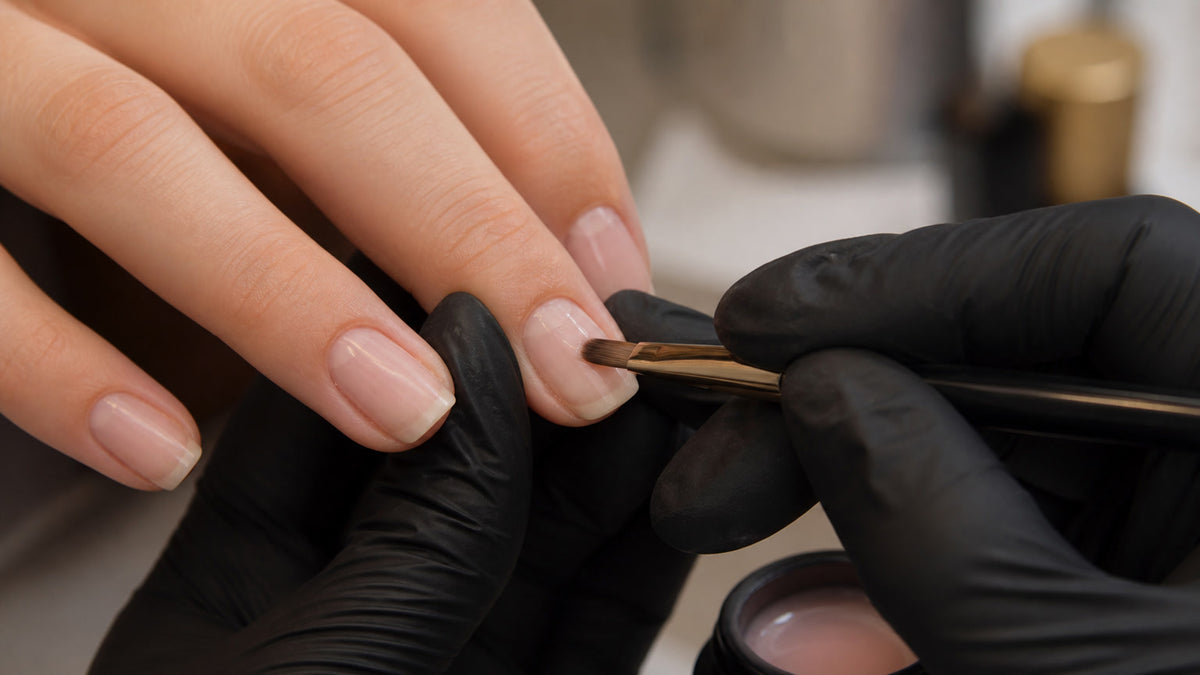
03Setting length and shape
The natural nail is shortened and shaped according to the requested style, current structure and intended coating. Square, oval, almond and other shapes distribute stress differently, so the final form should make sense for the available length and the client's daily use.
Shaping is more than drawing a silhouette from above. The technician also checks symmetry, side lines, free-edge thickness and whether the existing nail grows upward, downward or asymmetrically. Any planned correction should be explained rather than hidden behind terminology.
04Detailed dry preparation
This is the stage most people associate with Russian Manicure. The technician may gently lift and refine non-living keratinized material, clean the nail plate and prepare a controlled application perimeter. A combined manicure may use both an e-file and a cutting tool.
-
Create visibility
The surrounding area is gently organized so the technician can see the working boundary.
-
Select the working bit
Shape, diameter and abrasiveness are chosen for a specific task rather than for visual drama.
-
Use controlled passes
The hand remains supported while the bit moves continuously with light, deliberate contact.
-
Refine only what is appropriate
The technician stops when the planned preparation is complete; deeper is not inherently cleaner.
-
Remove dust and inspect
The area is cleaned so the nail and surrounding tissue can be checked before product application.
05Product application and structure
After preparation, dust and surface contamination are removed and the product system is applied according to its instructions. Depending on the service, this may be conventional polish, gel polish, a reinforcing base, builder gel or another material.
For structured services, the technician balances apex, sidewalls, free edge and overall thickness. Close application should remain controlled and should not place uncured product on the skin. Each layer must be compatible with the lamp and cured as directed by the product manufacturer.
This is why Russian Manicure and regular manicure cannot be compared only by cuticle preparation. Structure, product control and curing have a major influence on both appearance and wear.
06Final check and aftercare
The technician checks the surface, reflection, shape, side view and free edge. Oil or moisturizer may be applied after the coating is complete, followed by practical aftercare.
- Do not pick or peel lifting product.
- Use cuticle oil or moisturizer regularly unless your clinician advises otherwise.
- Wear suitable gloves for prolonged water and chemical exposure.
- Return for maintenance before structure becomes unstable.
- Seek appropriate advice for increasing pain, swelling, discharge, blistering or nail separation.
07What do the tools actually do?
| Tool | Typical purpose | What matters |
|---|---|---|
| E-file handpiece | Drives the selected rotating bit | Stable equipment, compatible bits and controlled handling |
| Removal bit | Reduces existing coating | Material identification, pressure and heat control |
| Diamond bits | Detailed dry preparation around the nail | Correct shape, abrasiveness, angle and tissue selection |
| Pusher | Assessment and gentle organization of the proximal area | No forceful scraping into living tissue |
| Nippers or scissors | Controlled removal in a combined method where appropriate | Training, visibility, local scope and conservative judgment |
| Hand file and buffer | Shape and surface refinement | Suitable grit and protection of the natural nail |
Tool appearance does not prove cleanliness. Reusable instruments require the complete processing mandated by the applicable jurisdiction, while single-use abrasives should be discarded after the client.
08How long should it take, and what should it feel like?
A Russian Manicure with removal and structured gel commonly takes longer than a simple polish service, but there is no universal duration. Nail length, old product, corrections, color and design can change the appointment substantially.
You may feel vibration, light contact and changes in hand position. You should not have to tolerate sharp pain, burning or bleeding to receive a detailed result. A professional technician communicates throughout the appointment and adjusts when feedback changes.
After the appointment, use the guide to Russian Manicure retention, aftercare and maintenance timing to protect the result and recognize when an earlier assessment is appropriate.
Connect this sequence with the broader professional Russian Manicure system. The tools checklist and nail plate preparation guide provide deeper support for tool selection and controlled preparation.

09Sources and further reading
This article is educational and does not provide medical, legal or licensing advice. Exact services and requirements vary by salon and jurisdiction. Practitioner observations are informed by Nailspiracy's Russian Manicure 360 curriculum and separated from independent public-health guidance. Reviewed August 2026.